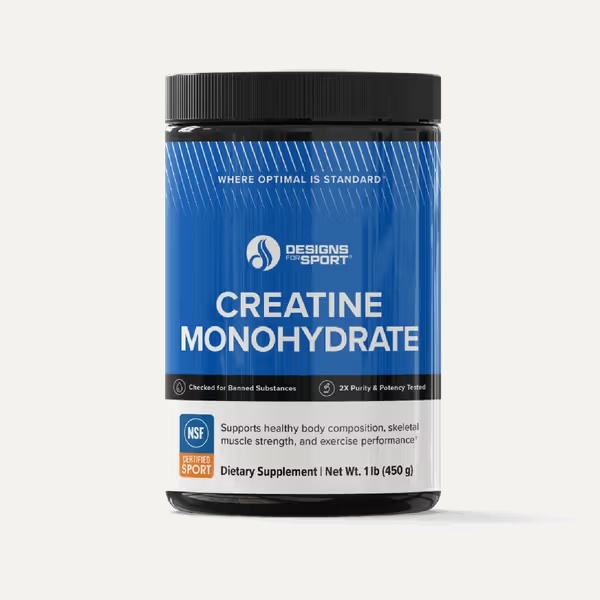
Creatine Monohydrate 450g powder
Benefits & overview
Creatine is involved in muscle contraction, with about 95% stored in skeletal muscle, especially type 2 fibers. Creatine is found mainly in red meat and seafood. People who consume creatine-rich foods may have higher tissue creatine levels than those who are vegans and vegetarians. As humans, we have a limited ability to produce creatine on our own, which makes it important to obtain sufficient amounts from food or supplements.
Exercise and Athletic Performance
Creatine monohydrate is the most studied supplement and is considered the most effective, as well as the safest, ergogenic (performance-, muscle strength- and recovery-enhancing) supplement for increasing exercise capacity and muscle growth during training. It is well established in scientific research that creatine supplementation leads to an increase in muscle mass, creatine concentration, production of cellular energy such as ATP, and improved exercise performance.
Human studies show that creatine monohydrate may have protective effects on brain function. In fact, the International Society of Sports Nutrition recommends that all athletes involved in sports with a risk of traumatic brain injury and/or spinal cord injury should take creatine to reduce the severity of these types of injury.
Healthy Aging
Creatine levels decrease with age, and muscle strength decreases at a rate of 1.2% to 1.5% per year after the age of 50. Research shows that creatine has positive effects for maintaining muscle at all ages, especially in older individuals. Supplementing with creatine monohydrate can support healthy muscles, energy and well-being as we age.
Current research shows that creatine monohydrate supplementation may support cognitive function by increasing the brain's creatine content, especially as an individual ages. Human studies show that creatine monohydrate may have protective effects on brain function.
Recommended dose
For a loading phase, take 3 to 4 scoops for 3 days, then 1 scoop once per day.